Event communication: a practical guide before, during, and after your event
Event communication covers everything you send to participants before the event, during the event, and after it. It includes confirmation messages, reminders, instructions, sharing materials, and feedback surveys—everything that makes attendance easy and the experience smooth. A clear event communication plan also helps you manage expectations and improve communication in event management.
As online events are dominating the industry, event communication becomes even more important than before. The right kind of communication can positively impact the entire event’s success, from marketing to arrival instructions and feedback.
We at Eventilla tend to divide event communication into three parts: communication before the event, messages during the event, and of course also after it. In addition to these, one should never underestimate a good event crisis communications plan.
As a rule of thumb, we think the participant should hear from you at least once before, during, and after the event. In this article we share our best practices for event communication, whether it’s a question of live or online events.
In this article you’ll find…
- Event communication style
- Targeting event communication
- Communication and marketing before the event
- Communication during the event
- Communication after the event
1. Event communication style
The style of your event communication depends on your event’s genre and your brand. The most important thing is to keep the tone of voice consistent across the entire attendee journey. An event management tool helps you build communications in advance—carefully and without rush. By scheduling emails and SMS messages to participants, you can ensure high-quality communication throughout.
Examples of different event communication styles:
“Dear participant, Thank You for registering for Eventilla’s course. The course starts on Monday at 10:00 AM. We kindly ask you to arrive at the venue or open the webinar stream at least 5 minutes earlier. You can find the training materials in the material bank; the password was sent to you earlier. If you have any questions, don’t hesitate to contact us: sales@eventilla.com.”
“Hi Team! Great to have you onboard. We hope you’re as excited as we organizers are! To utilize the entire scheduled program time, we ask you to arrive or open the webinar lines at least 5 minutes earlier. Can’t wait? We can’t either! Luckily you can access the material bank already now—just check the password email you received earlier. Any questions or want to share your excitement? Contact us: sales@eventilla.com. See you tomorrow, yay!”
Bet you noticed the difference? Don’t underestimate the power of wording—not even in short SMS messages. Consistent event communication strengthens the participant’s image of your brand and improves communication in event management.
Targeting event communication
In addition to choosing the right tone of voice, consider how to target event communication to different audiences. Is it best that everyone receives the same message, or should content depend on participation type? In hybrid events, for example, you’ll typically send different instructions to in-person and online participants. Some events require separate messages for different days (e.g., Friday vs. Saturday), or different badge types (VIP, press). In webinars, you might send a feedback survey to attendees and a recording link to those who missed it.
A modern platform—event software for event communication—helps you target messages to the right group based on registration form selections or attendance data. This is one of the fastest ways to improve communication in event management without adding manual work.

2. Communication and marketing before the event
Event marketing
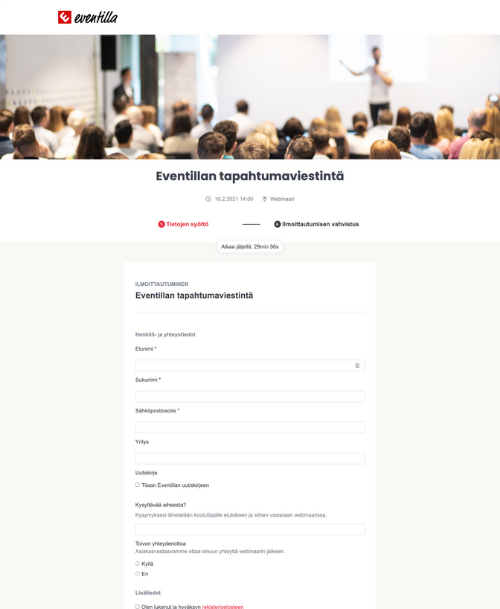
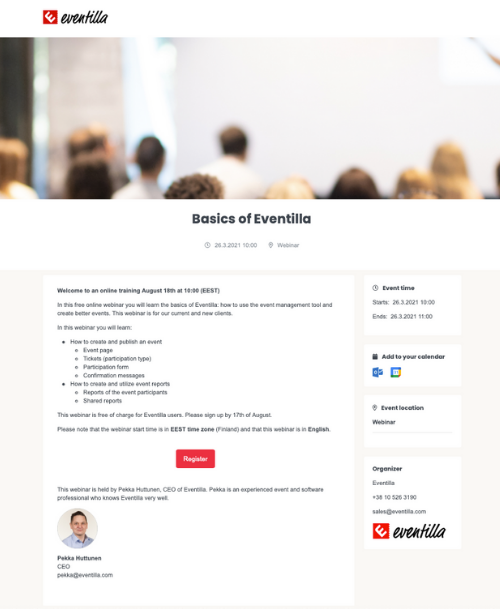
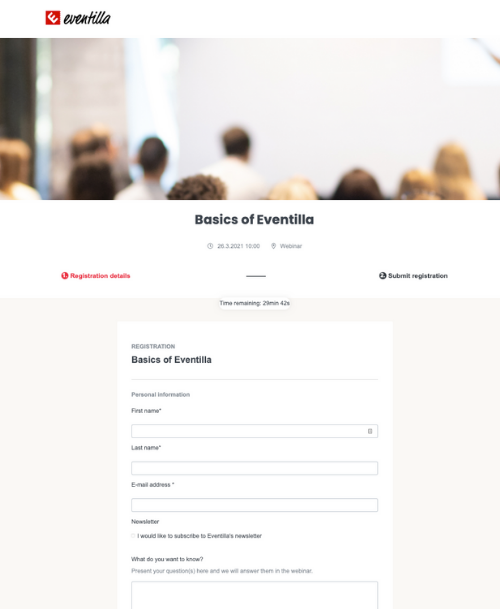
Event marketing before the big day is crucial for growing attendance and overall success. Direct your digital marketing traffic to a brand-like landing page where participants can register and find everything they need. You can market your event, for example…
- On your own website, by utilizing an event calendar
- In your organization’s social media channels
- In social media groups
- With paid digital advertising (Google, Facebook, LinkedIn, Instagram… you name it)
- Via personal invites
- With newsletters from your email software (such as LianaMailer)
Remember to check that all your event materials follow your brand guidelines, so the audience receives a consistent visual and verbal image of the event.
Your confirmation message is the first touchpoint in event communication
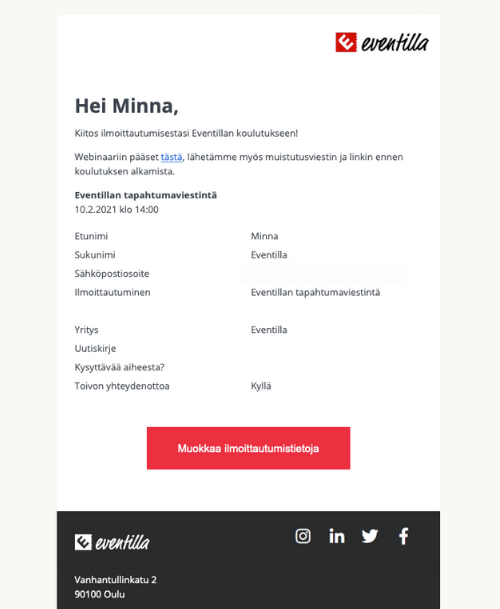
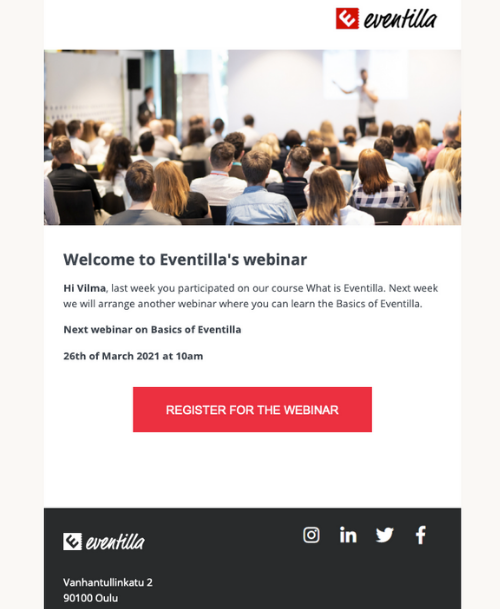
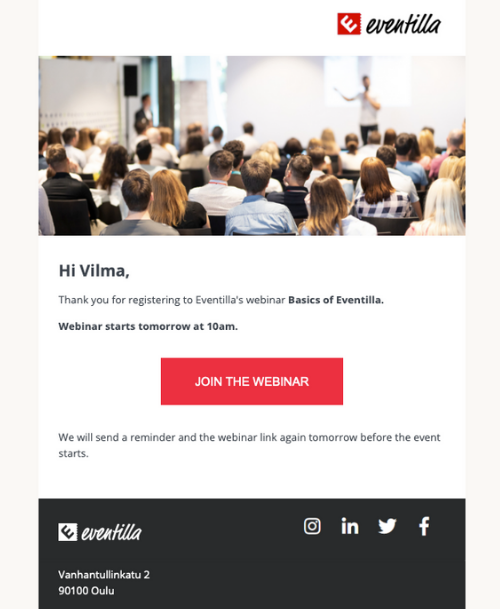
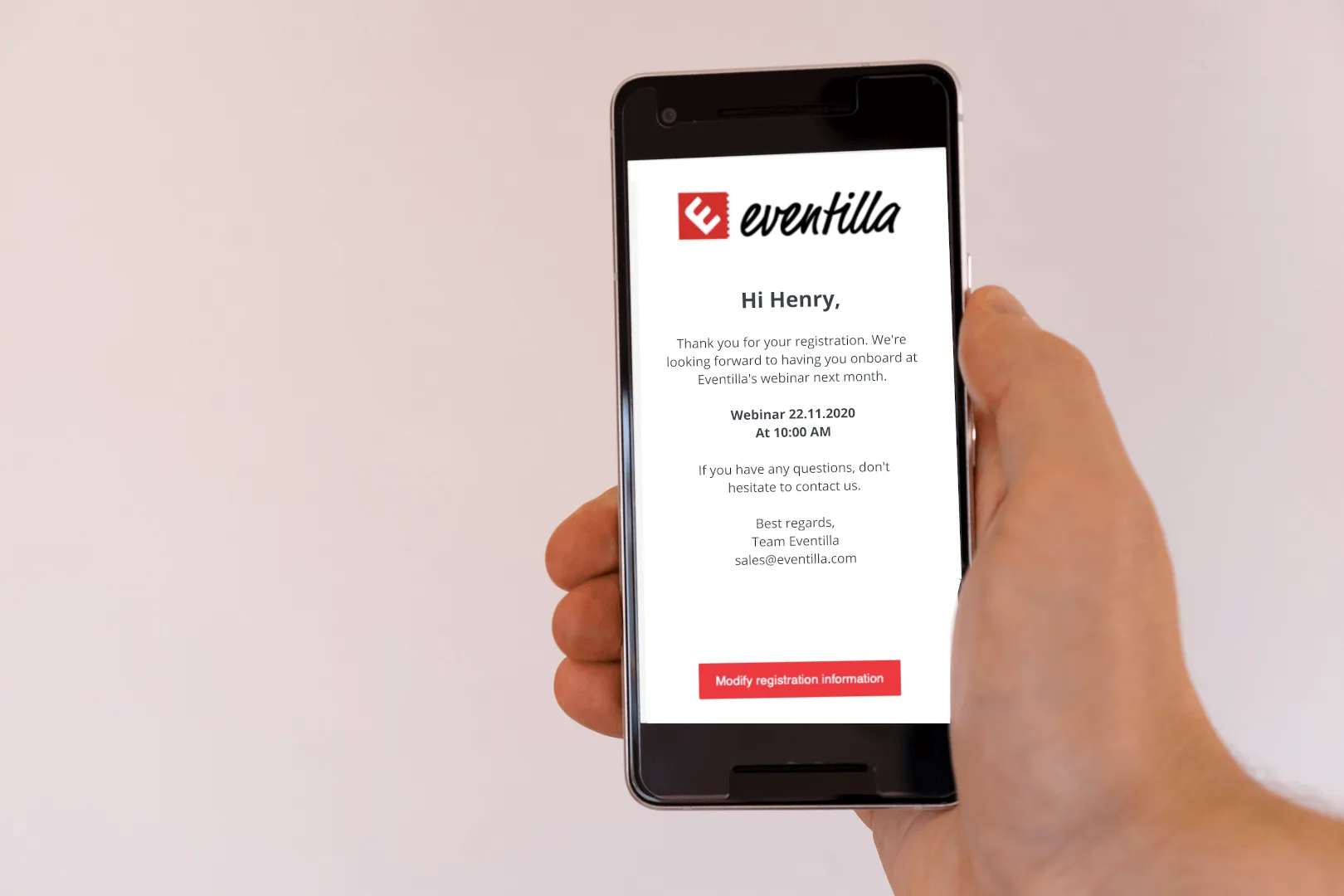
A confirmation message is often the participant’s first real touchpoint after registration. A clear confirmation message confirms the registration, strengthens commitment, and reduces uncertainty before the event—an easy win for event communication and your overall attendee experience.
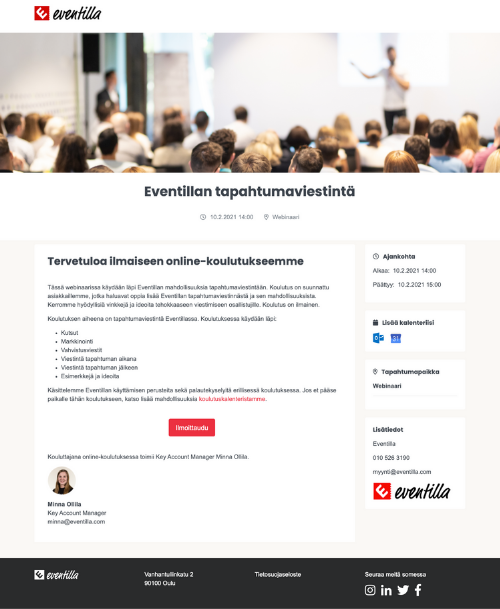
In your event communication plan, send the confirmation message automatically right after registration. Include at least the event name, date and time, location or access link, and what to expect next (reminders, practical instructions, and where to find updates). If you have a separate info page, link it in the confirmation message.
Tip! Use the event name in the confirmation message subject line via variables in your event management system. That makes the message easy to find later with a quick inbox search.
Instructions and reminders
One of the main goals of event communication is to make participation effortless. Before arriving at the venue or opening a webinar connection, participants need clarity: dress code, what to bring, whether they should download any software, whether video should be on, and so on. Walk through the attendee journey in advance and write down what they might still be missing. Send instructions as a clear checklist well before the event and follow up with reminders when needed.
Tip! You can use event page tabs as an always-up-to-date information hub for participants.
Inspiring and preparing participants
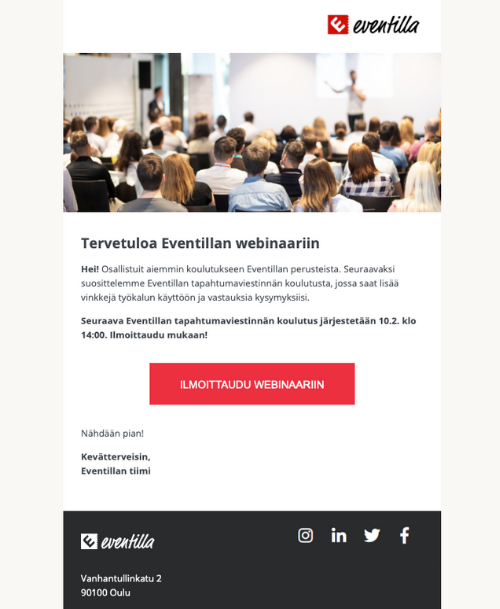
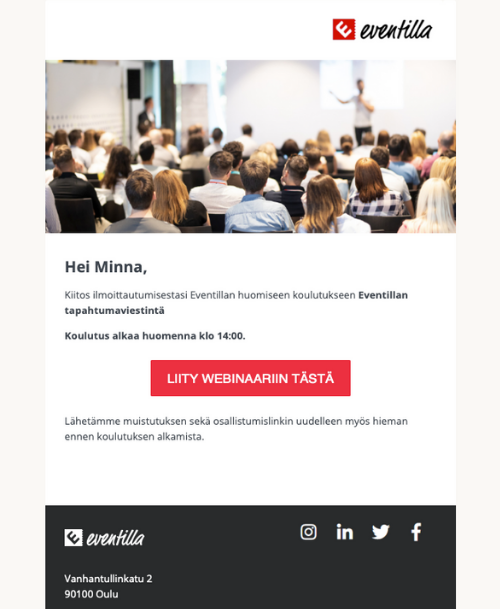
Almost as important as instructing is inspiring participants and setting the right mood ahead of time. A welcoming message a few days (or hours) before the event can boost show-up rates, reduce questions, and improve the overall experience—especially when your event communication plan is consistent across channels.
3. Communication during the event
Instructions and reminders
Messages during the event can be very time-sensitive. That’s why we recommend sending urgent updates—such as schedule changes or safety instructions—via SMS instead of email. Text messages are likely to reach participants faster.
SMS is also useful for reminding participants about the next session or location (especially at large conferences and fairs), lost-and-found pickup, or anything that requires quick action.
Sending materials
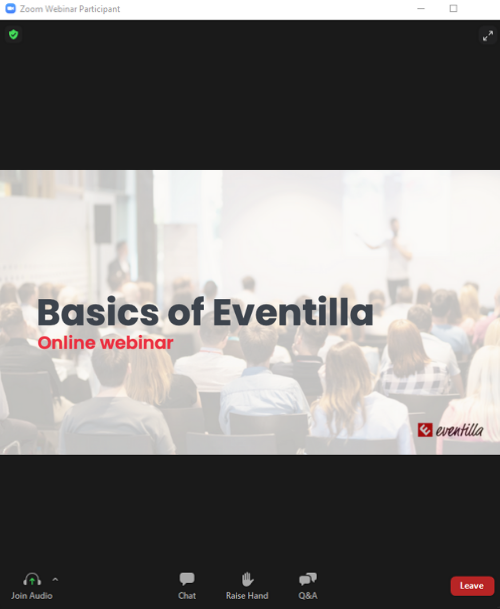
During the event, you can send participants the next lecture material or links to resources. Automate this ahead of time and you’ll be free to focus on what matters most. With the right event software for event communication, materials reach the audience reliably and on time.
4. Event communication after the event
Even though the big day is over, you shouldn’t forget the participants. After the event, you can show appreciation in many ways:
Thank you messages
Let’s face it: your event is nothing without its participants. That’s why you should always thank them for showing up—on-site or online. They used their precious time, and they made your event possible.
Feedback surveys
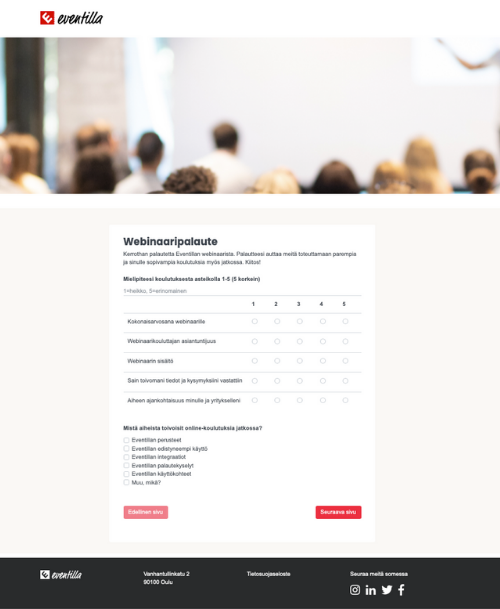
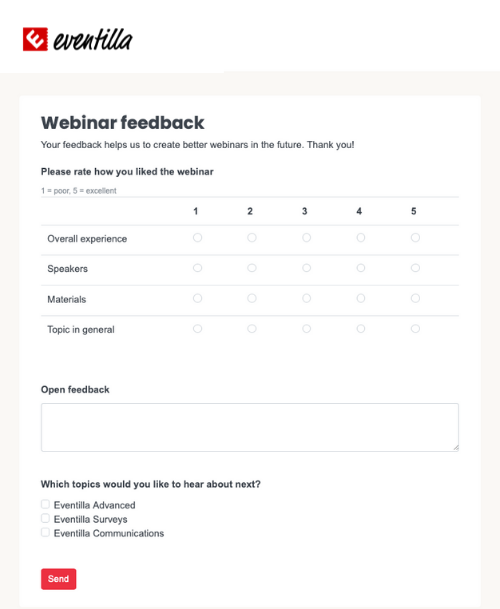
Asking for feedback after the event should be obvious, but it still gets forgotten. By asking for feedback, you show that the participants’ experience matters. Feedback is also critical for improving your next events—how else would you know what to keep and what to refine?
Psssst… Discover the possibilities of Eventilla Surveys here.
Sending materials
Send the event materials afterwards so participants can revisit them in their own time. This also reduces the need for note-taking during sessions, allowing them to focus and enjoy the experience—another easy improvement to communication in event management.
Re-marketing
Ask for marketing permission during registration so you can invite participants to your next event. Many will happily continue—e.g., from a basics session to an advanced course.

Want to make event communication easy?
Frequently asked questions about event communication
- What does event communication mean?
Event communication includes all messages you send to participants before, during, and after an event. It typically covers confirmation messages, reminders, practical instructions, sharing materials, and feedback surveys. - What is an event communication plan?
An event communication plan is a simple roadmap of what you communicate, when, to whom, and through which channels (email, SMS, landing pages, in-app updates). It helps ensure consistent communication in event management and reduces last-minute confusion. - Why is a confirmation message important in event communication?
A confirmation message is often the participant’s first touchpoint after registration. A clear message reduces uncertainty, confirms key details, and improves the attendee experience—while also lowering support questions. - What should a confirmation message include?
Include the event name, date and time, location or access link, contact details, and what to expect next (reminders, instructions, and where to find updates). If you have an info hub, link it in the message. - When should event communication be automated?
Automate the basics: confirmation messages, reminders, and scheduled material emails/SMS. This saves time and ensures messages are delivered consistently—especially when using event software for event communication. - Can event communication be targeted to different attendee groups?
Yes. You can target messaging for on-site vs. online attendees, different ticket types, different event days, or VIP/press groups. Targeting improves relevance and makes communication in event management more effective. - Which messages should be sent after an event?
After the event, event communication typically includes thank you messages, feedback surveys, sending materials, and (if permission is granted) invitations to future events. Post-event communication completes the attendee journey and supports your next event’s success.
About the author
Kirjoittajasta